

Pop Art is often filed under flat color and cartoon outlines, yet a large part of it aimed for a cool, hard-edged realism drawn straight from photographs and printed media. This is the story of realistic Pop Art: where it borrowed from the camera, how it overlaps with Photorealism, and why its sharp-focus version of American life still feels so current.
Table of Content
- What "Realistic" Pop Art Means
- Pop Art's Realist Roots
- Photorealism: Painting the Photograph
- How Realistic Pop Is Built
- The American Scene in Sharp Focus
What "Realistic" Pop Art Means
Pop Art rose in the late 1950s and 1960s by lifting imagery from advertising, comics, and product packaging. The label "realistic" here does not mean old-fashioned realism; it means the work looks like the slick printed source it copies, right down to the dots, gloss, and crisp edges of commercial reproduction. A soup can rendered this way is not softened or interpreted; it is presented as the thing itself, clean and immediate.
That commitment to the surface of mass media is what separates realistic Pop from looser, painterly styles. The artist's hand hides, and the printed world takes center stage.
Pop Art's Realist Roots
Two figures anchor this approach. Andy Warhol and Roy Lichtenstein are celebrated for exploring the relationship between fine art, advertising, and consumerism, and both leaned on mechanical reproduction to get there. Warhol's silkscreens repeat a photograph until it becomes a pattern, while Lichtenstein rebuilt comic panels by hand, complete with the Benday dots of cheap color printing.
The effect in each case is a painting that mimics a printed page. The realism is not of nature but of the media stream, a mirror held up to the images Americans saw every day.
Photorealism: Painting the Photograph
By the 1970s a related movement carried this logic to its extreme. Painters such as Richard Estes, Ralph Goings, and Audrey Flack worked directly from photographs to produce canvases nearly indistinguishable from the source image. Curators note that Photorealism has sometimes been described as a more mechanical offshoot of 1960s Pop art, sharing its debt to the wide spread of photographic media.
Where Pop often flattened and simplified, Photorealism piled on detail: chrome bumpers, diner windows, and reflections rendered with obsessive precision. Both, though, treat the photograph as the true subject of the painting.
How Realistic Pop Is Built
The realism is a product of method, not magic. A typical sharp-focus canvas moves through a set sequence, from the chosen photograph to a smooth, seamless finish with the brushwork deliberately erased.
Source: Humanities LibreTexts, Photorealism
The American Scene in Sharp Focus
Realistic Pop and Photorealism share a favorite subject: the ordinary American landscape of diners, pickup trucks, storefronts, and gas stations. That focus links them to a much older tradition of picturing national life, which is why it pays to understand what Americana really means before reading these paintings. The same familiar imagery runs through Americana art history, from nineteenth-century Main Streets to chrome-lit parking lots.
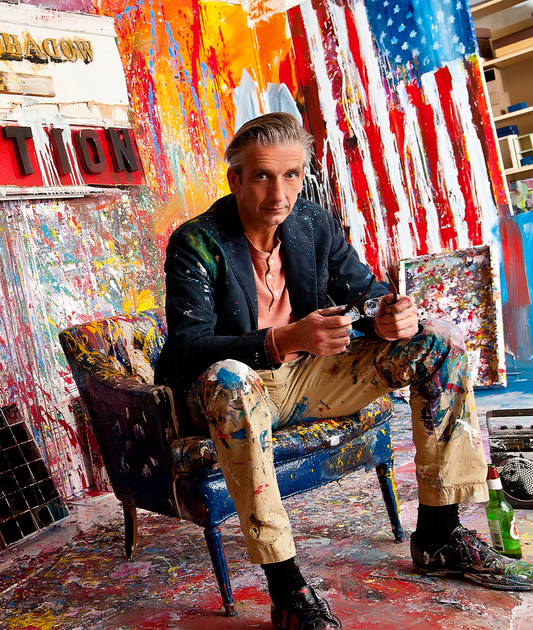
The tradition continues today. The work of Steve Penley Art takes recognizable American subjects and renders them boldly, keeping the Pop instinct for iconic imagery while adding a painter's energetic hand.
Related reading: see the full Americana collection, and read more on the famous Pop Art artists whose photograph-driven work set the stage for everything above.