

When you look at a painting of a weathered barn, a classic glass Coca-Cola bottle, or a stoic portrait of Abraham Lincoln, you aren’t just looking at "art." You are looking at a feeling. You are witnessing a collection of history, folklore, and cultural heritage known as Americana art.
For art lovers and patriots alike, Americana is more than a genre—it is a celebration of the United States' unique identity. At Penley Art Co., we believe that understanding Americana is essential to appreciating the bold, iconic works that define our nation's visual history. But what exactly does this term mean, and where does it come from?

In this guide, we will explore the definition, history, and themes of Americana, and introduce you to the artists who have shaped this enduring style—starting with the modern master of the genre, Steve Penley.
What is Considered Americana?
Americana is a broad term used to describe artifacts, culture, and art that are characteristic of the United States. It is the physical and visual manifestation of the American experience. While "American history" refers to the timeline of events, Americana refers to the stuff of that history—the objects, the songs, the folklore, and the aesthetic that define the daily life and dreams of the American people.
Americana can refer to anything involving USA culture, including history, architecture, art, cooking, and cultural artifacts. It encompasses:
-
Artifacts: Vintage license plates, 1950s diners, antique quilts, and baseball memorabilia.
-
Music: Folk, bluegrass, blues, and "roots" music that tells the story of the common man.
-
Art: Folk art, realism, and pop art that utilizes American iconography (flags, eagles, presidents).
-
Literature & Folklore: The tall tales of Paul Bunyan, the writings of Mark Twain, and the legends of the Wild West.
Essentially, if an object or image evokes a sense of nostalgia for the American past or celebrates the nation's distinct character, it is considered Americana.
Why Do They Call It Americana?
The word itself is a blend of "American" and the Latin suffix "-ana".
The suffix -ana (or -iana) is used to denote a collection of notable sayings, anecdotes, or objects related to a specific person, place, or subject. For example, "Shakespeareana" refers to objects related to Shakespeare. Therefore, Americana literally translates to "things related to America."
The term gained popularity in the mid-19th and early 20th centuries as collectors and historians began to categorize books, maps, and manuscripts that documented the history of the New World. Over time, the definition expanded beyond dusty libraries to include the vibrant, living culture of the nation—music, folk art, and the commercial icons that became global symbols of freedom.
What is the Difference Between American and Americana?
While the words are often used interchangeably in casual conversation, there is a distinct difference between "American" and "Americana."
-
American: This is an adjective denoting nationality or origin. A smartphone designed in California is an American product. A skyscraper in New York City is American architecture. It is a factual descriptor of place.
-
Americana: This refers to the cultural identity and emotional resonance associated with that place. A modern smartphone is "American," but it is not "Americana." However, a rotary telephone from 1950 is definitely Americana.
The difference lies in nostalgia and symbolism. Americana implies a connection to the heritage, traditions, and folklore of the country. It is an appreciation of the "classic" version of America—the small towns, the pioneers, the industrial revolution, and the symbols of democracy.
What Themes are Common in Americana?
Americana is rich with recurring themes that speak to the collective memory of the nation. When studying American Studies at institutions like Cornell University, scholars often analyze these themes to understand how the U.S. views itself.
Common themes include:
-
Patriotism and Democracy: Images of the American flag, the Statue of Liberty, the White House, and portraits of Founding Fathers.
-
The Frontier and the West: Cowboys, horses, vast landscapes, and the spirit of exploration and rugged individualism.
-
Nostalgia for " The Good Old Days": Depictions of small-town life, main streets, front porches, and a simpler, slower pace of living.
-
Industrial & Commercial Icons: The rise of American industry is celebrated through images of trains, factories, and iconic brands like Coca-Cola or Ford.
-
The Common Man: Celebrating the worker, the farmer, and the everyday citizen who builds the nation.
What is the Americana Look?
The "Americana look" is instantly recognizable. In interior design and fashion, it is often characterized by a rustic, vintage, or heritage aesthetic. Key visual elements include:
-
Color Palette: Heavily reliant on red, white, and blue, but often in muted, weathered, or antique tones (brick red, navy, cream) rather than bright primaries.
-
Textures: Distressed wood, denim, canvas, leather, and metal. The look embraces wear and tear as a sign of authenticity.
-
Patterns: Stars and stripes, gingham, plaid, and quilts.
-
Typography: Bold, vintage fonts reminiscent of old general store signage or wanted posters.
In fine art, the Americana look often combines these elements with bold composition to evoke emotion and memory.
Who Are Famous Americana Artists?
Americana art has been shaped by visionaries who understood the power of American symbols. While many have contributed to the genre, a few stand out for their ability to capture the spirit of the nation.
1. Steve Penley
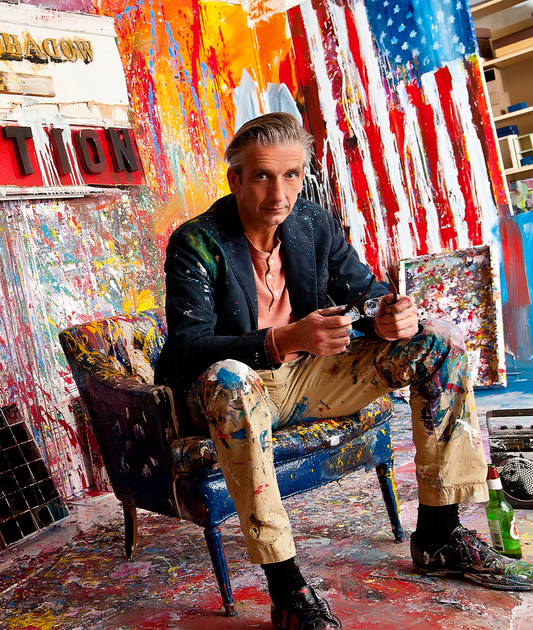
At the forefront of the modern Americana movement is Steve Penley. Known for his bold, expressionist style, Penley has redefined how we view American icons. Unlike the rigid realism of the past, Penley’s work explodes with color and energy, breathing new life into historical subjects.
Penley is celebrated for his iconic portraits of figures like Abraham Lincoln, George Washington, and Ronald Reagan, as well as his vibrant depictions of the Statue of Liberty and the classic Coca-Cola bottle. His style creates a bridge between the past and the present; he takes the stoic symbols of history and reconstructs them with loose, confident brushstrokes that feel undeniably modern.
His work is not just about painting a likeness; it is about capturing the ideal of the subject. As noted in various biographical accounts, Penley aims to "reconstruct" the American hero in an era of deconstruction. His art hangs in the halls of Congress, corporate headquarters, and the homes of collectors who value the optimism and strength inherent in the American story. For those seeking the definitive look of contemporary Americana, Steve Penley is the standard-bearer.
2. Norman Rockwell
No discussion of Americana is complete without Norman Rockwell. For decades, his illustrations for The Saturday Evening Post defined the American self-image. Rockwell was a master of narrative storytelling, capturing the humor, pathos, and innocence of everyday life. From the Thanksgiving table to the small-town doctor’s office, Rockwell painted the America that many people still long for today. His later work also tackled serious social issues, proving that Americana could be a vehicle for civil rights and social change.
3. Grandma Moses
Anna Mary Robertson Moses, known as Grandma Moses, is the quintessential American folk artist. She began painting in her 70s, depicting rural life in New York and Virginia. Her style was "naïve" or self-taught, lacking traditional perspective but overflowing with charm and authenticity. Her landscapes of snowy winters, maple sugaring, and farm life are pure Americana, representing the innocent, agrarian roots of the nation. You can learn more about the depth of folk art traditions at institutions like Vassar College's American Studies program, which explores the cultural formations of the U.S.
Some other famous Americana painters include:
-
Grant Wood: As a leader of the Regionalist movement, he immortalized the stoic, hardworking spirit of the Midwestern heartland through sharply detailed landscapes and portraits.
-
Edward Hopper: He captured the quiet, introspective side of twentieth-century Americana by mastering the light, shadow, and deep solitude found in urban spaces.
-
Andrew Wyeth: His deeply emotional, raw style of American realism permanently tied the quiet rural landscapes of Pennsylvania and Maine to the national artistic identity.
-
Georgia O'Keeffe: She redefined the American aesthetic by translating the vast landscapes and stark beauty of the Southwest into pioneering works of modernism.
-
Winslow Homer: His powerful depictions of the untamed wilderness and rugged coastlines captured the classic nineteenth-century American struggle between humanity and nature.
-
Andy Warhol: He revolutionized Americana for the modern era by turning commercial consumer products and celebrity obsession into high art.
Americana is more than just a style; it is a way of remembering who we are. Whether through the rustic charm of a folk painting or the bold, colorful strokes of a Steve Penley original, this genre keeps the American spirit alive.
Ready to bring a piece of authentic Americana into your home? Explore the iconic collection at Penley Art Co. today.