

If you have ever looked at a painting that feels strikingly real yet carries the bold energy of a comic strip or a commercial advertisement, you have likely encountered pop art realism. This compelling stylistic intersection bridges two seemingly opposite worlds: the meticulous accuracy of realistic depiction and the mass-culture commentary of the Pop Art movement. Readers searching for this style are usually looking to understand how artists blend fine-art precision with everyday commercial subjects, or they are searching for visual inspiration to bring this distinct, high-contrast aesthetic into their own creative projects and home decor.
When it comes to art, few movements are as distinctly different as Pop Art and Realism. While Pop Art celebrates modern culture and mass media with bold colors and iconic imagery, Realism focuses on accurate, lifelike depictions of the world around us.
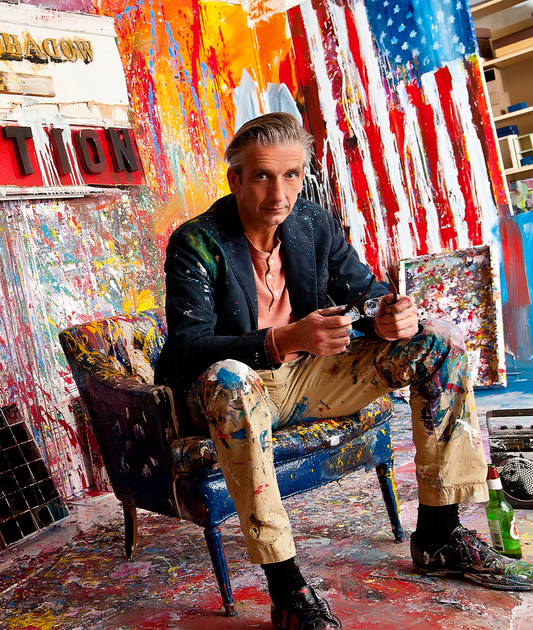
The pop art vs realism art debate has gone on for quite some time as many have opinions on these two styles. We will also discuss contemporary artist Steve Penley, whose work bridges the gap between both movements.
For related art debates, check out our other discussions on artistic differences between various movements: pop art vs op art, as well as pop art vs contemporary art, the classic pop art vs abstract expressionism, and our latest debate on pop art vs surrealism art., and our latest, pop art vs minimalism.
Pop Art & Realism: Bold, Bright, and Full of Culture
Pop Art emerged in the 1950s as a reaction to the seriousness of abstract art. Led by figures like Andy Warhol and Roy Lichtenstein, Pop Art celebrated mass culture, consumerism, and popular icons. The movement took images from everyday life—advertisements, celebrities, comic strips—and elevated them to the status of fine art, making art more accessible and relevant to the average person.
One contemporary artist whose work clearly draws from Pop Art is Steve Penley. Known for his colorful portraits of American icons like George Washington and Abraham Lincoln, Penley uses bright, bold colors and larger-than-life brushstrokes, which are signature elements of the Pop Art style. His art brings history into the present, transforming well-known figures into part of the pop culture conversation. You can discover more of Penley’s vibrant works at Penley Art Co..
Realism & Pop Art: The Beauty of Life’s Details
Realism, which began in the mid-19th century, aims to represent the world as it is, without idealization or exaggeration. Artists like Gustave Courbet and John Everett Millais were pioneers of the movement, seeking to depict real people, everyday life, and common struggles in a truthful, unembellished manner.
Realism was a response to the romanticized depictions of life in art and literature, focusing instead on the raw beauty and truth of ordinary life. Whether it’s a depiction of a working-class person or a still life of simple objects, Realism seeks to portray the world with accuracy and sincerity, often focusing on social issues and the human experience.
Pop Art vs Realism: Key Differences
The key differences between Pop Art and Realism lie in their approach to subject matter and style. Pop Art is playful, colorful, and embraces commercial imagery and popular culture. It thrives on bold contrasts and often uses humor or irony to make statements about consumerism, fame, and modern life. In contrast, Realism is concerned with portraying life exactly as it is, with meticulous attention to detail and a focus on everyday, often underrepresented subjects.
While Pop Art uses exaggerated forms and flat colors to make an impact, Realism relies on detailed, lifelike representations to capture the nuances of the human condition. Pop Art is about accessibility and culture, while Realism aims to capture the true essence of life, often focusing on ordinary people and the rawness of their experiences.
The Amazing Evolution of Pop Art Realism in Modern Fine Art
Mastering the balance of pop art realism requires an artist to capture the tangible textures of the real world while subverting them with the hyper-saturated palettes and flat, hard-edged lines native to popular culture.
Unlike traditional realism, which often aims for a neutral, photographic documentation of life, this hybrid genre uses realism painting techniques to elevate ordinary, mass-produced objects like vintage soda cans, classic cars, or celebrity portraits into high-art statements. By focusing on everyday consumer goods with sharp architectural precision, prominent pop art realists create a brilliant commentary on modern consumerism.
The resulting artwork is simultaneously nostalgic and ultra-modern, making pop art realism artwork a highly sought-after style for contemporary galleries, digital illustrators, and interior designers looking to make a bold, sophisticated statement.
Steve Penley: A Modern Bridge Between Pop Art and Realism
While Penley’s work is firmly rooted in the tradition of Pop Art, his portraits of iconic American figures show how these styles can intersect. Penley’s large-scale portraits have a lifelike quality that resonates with the precision of Realism, yet he applies the bright, bold color palette typical of Pop Art. His use of color and cultural references brings a sense of modernity to the figures he paints, making them feel both historical and contemporary at the same time.
This blending of Pop Art’s boldness and Realism’s attention to detail makes Penley’s work unique. His art shows how two seemingly opposite styles can come together to create something fresh and exciting.
Our Final Takeaways on Pop Art vs Realism in 2026 and Beyond
Both Pop Art and Realism have made lasting contributions to the art world, each offering a unique perspective on culture, society, and the human experience. While Pop Art celebrates the vibrancy and commercialism of modern life, Realism reminds us of the beauty in the ordinary, offering a window into everyday life.
Artists like Steve Penley show that it is possible to blend elements of both movements, creating art that is bold, colorful, and full of cultural significance while still honoring the detail and accuracy of life.