

Table of Contents
In the dazzling world of modern art, few movements have defined the 20th century as powerfully as Pop Art and Abstract Expressionism. At first glance, they couldn’t be more different: one celebrates mass culture, the other dives deep into personal emotion!
But both reshaped how we view art and continue to influence creators today, and is quite different than the classic pop art vs op art as well as pop art vs contemporary art debates, including contemporary American pop art artist Steve Penley.
Abstract Expressionism: Emotion on Canvas
Born in post-World War II America, Abstract Expressionism was less about subject matter and more about raw feeling. Artists like Jackson Pollock, Mark Rothko, and Willem de Kooning pioneered this style with bold brushwork, intense color fields, and spontaneous execution. The goal wasn’t to depict reality—it was to express the inner world.
Abstract Expressionism came with a kind of heroic seriousness. These artists saw themselves as philosophers with paintbrushes, searching for truth through abstraction. Viewers were invited to interpret emotion, tension, and vulnerability in the chaotic beauty of the canvas.
Pop Art: Culture as Canvas
By the 1950s and 60s, another wave hit the art world: Pop Art. Led by icons like Andy Warhol, Roy Lichtenstein, and Richard Hamilton, Pop Art brought commercial imagery, comic strips, soup cans, celebrities into the gallery. It was witty, bold, ironic, and brashly colorful.
Where Abstract Expressionism was deeply personal, Pop Art was unapologetically cultural. It questioned what art could be by elevating the everyday. Pop artists weren’t painting their pain; they were painting products, media, and fame. And in doing so, they made a powerful statement about consumerism and identity.
Steve Penley: A Contemporary Pop Art Realist with Shades of Abstract Expressionism
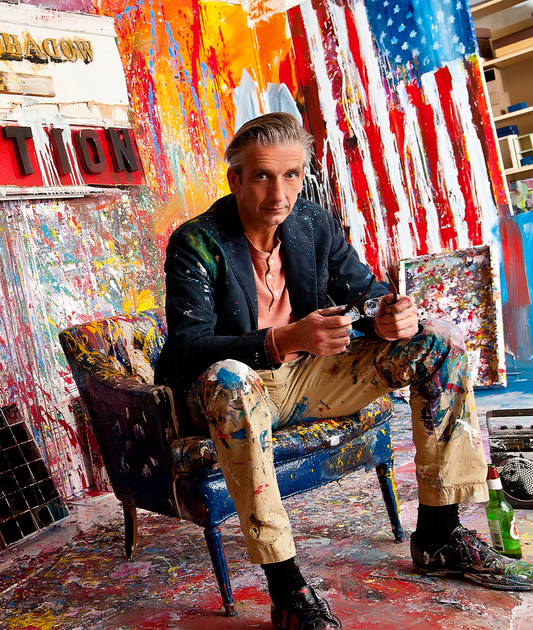
Enter Steve Penley, a modern artist whose work blends Pop Art’s vibrant palette with a uniquely American perspective. Best known for his explosive portraits of U.S. presidents, historical figures, and patriotic themes, Penley channels the energy and accessibility of Pop Art, but with a reverence for national identity.
Penley’s bold brushwork and vivid colors echo the spontaneity of Abstract Expressionism, yet his subject matter—icons like George Washington and Abraham Lincoln—grounds his work in recognizable form. It’s a fusion of movements: emotional intensity meets cultural commentary.
Pop Art vs Abstract Expressionism: Which One Speaks to You in 2026?
Pop Art and Abstract Expressionism represent two powerful poles in the art world. One invites you to feel, the other to think. One looks inward, the other outward. Artists like Steve Penley prove that the lines between these styles can blur, creating something uniquely modern and impactful.
Whether you’re drawn to the meditative stillness of Rothko or the electric pop of Warhol—or the patriotic punch of Penley—both Pop Art and Abstract Expressionism movements have changed how we define art in the past, in 2025, and also in the future.
Pop Art vs. Abstract Expressionism: Here are 8 Common Questions We Often Hear:
1. What is the fundamental difference between Pop Art and Abstract Expressionism?
The primary difference lies in their focus: Abstract Expressionism looks inward to express raw, personal emotion and the artist's "inner world" through abstraction. In contrast, Pop Art looks outward at popular culture, using recognizable commercial imagery, media, and icons to comment on consumerism and identity.
2. When did these two movements emerge?
-
Abstract Expressionism was born in post-World War II America (the late 1940s and early 1950s).
-
Pop Art rose to prominence shortly after, during the 1950s and 1960s, as a reaction against the "seriousness" of previous movements.
3. Who are the key artists associated with each style?
-
Abstract Expressionism: Pioneers include Jackson Pollock, Mark Rothko, and Willem de Kooning.
-
Pop Art: Iconic figures include Andy Warhol, Roy Lichtenstein, and Richard Hamilton.
4. What does the subject matter typically look like for each?
-
Abstract Expressionism: Features bold brushwork, intense color fields, and spontaneous, often chaotic forms that do not depict reality.
-
Pop Art: Features everyday objects and famous figures, such as soup cans, comic strips, celebrities, and consumer products, often rendered in a witty or ironic style.
5. Is Abstract Expressionism meant to be interpreted literally?
No. Abstract Expressionism is about feeling rather than depicting a specific object. Viewers are encouraged to interpret the emotion, tension, and vulnerability within the paint and color, rather than looking for a recognizable "thing."
6. Why is Pop Art often called "unapologetically cultural"?
Pop Art broke the traditional boundaries of what was considered "fine art" by elevating common, mass-produced items and media culture into the gallery space. It celebrated—and at times questioned—the vibrancy of modern life and consumer habits.
7. How does the work of Steve Penley bridge these two movements?
Steve Penley is described as a Contemporary Pop Art Realist who blends elements of both:
-
From Pop Art, he takes a vibrant palette and accessible, iconic subject matter (like U.S. Presidents and historical figures).
-
From Abstract Expressionism, he adopts bold, spontaneous brushwork and an energetic, emotional intensity in his execution.
8. Which movement is considered "better"?
Neither is inherently better; they simply offer different experiences. Abstract Expressionism invites you to feel, while Pop Art invites you to think about the world around you. Many modern artists, including Steve Penley, prove that the most impactful art often blurs the lines between these two styles.