

Ahh, the famous pink flower painting. There is perhaps no subject in art history as enduring as the flower, and no color as emotionally complex as pink.
For centuries, artists have used pink floral motifs to explore flower art themes ranging from divine love to fleeting vanity. Paintings about flowers has been popular and will always be popular.
But pink was not always the "pretty" color we know today. Pink flower paintings took some time to become mainstream. In the 18th century, it was a symbol of masculine power and aristocratic luxury, only later softening into a symbol of femininity and romance.
Table of Contents
- The History of Pink in Floral Art
-
The 10 Best Pink Flower Paintings
- 1. Steve Penley: "Flowers on Pink"
- 2. Vincent van Gogh: "Roses"
- 3. Claude Monet: "Water Lilies" (Pink Variations)
- 4. Georgia O'Keeffe: "Pink Tulip"
- 5. Pierre-Auguste Renoir: "Roses"
- 6. Andy Warhol: "Flowers"
- 7. Henri Fantin-Latour: "Pink Roses"
- 8. Rachel Ruysch: "Flower Still Life"
- 9. Berthe Morisot: "Peonies"
- 10. Hokusai: "Cherry Blossoms at Yoshino"
- FAQ: Collecting & Symbolism
The History of Pink in Floral Art
The use of pink in art has a fascinating trajectory. In the Renaissance, pink was often created using a pigment called "cinabrese," a mixture of red sinopia and lime white, primarily used for skin tones rather than flora. However, as the Language of Flowers (Floriography) gained popularity in Europe, artists began using specific shades to convey secret messages.
By the time the Impressionists arrived in the late 19th century, pink became a tool for studying light. Artists like Monet and Renoir realized that shadows weren't black; they were violet, blue, and deep pink. This revolutionized floral painting, turning stiff botanical studies into vibrating fields of color.
The 10 Best Pink Flower Paintings of All Time
1. Steve Penley: "Flowers on Pink"
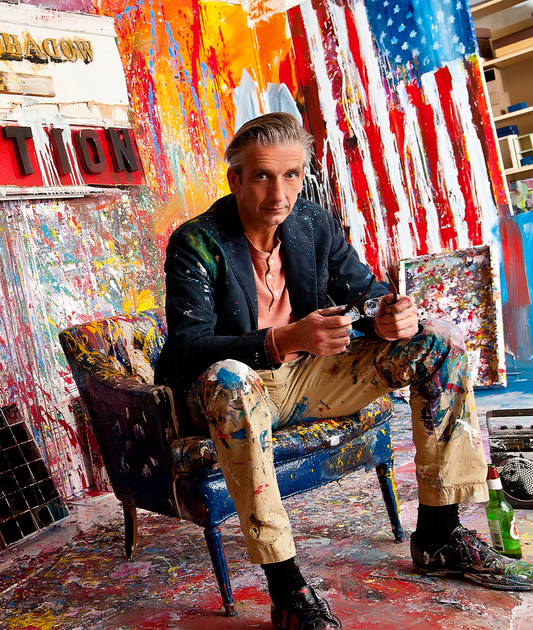
Style: Neo-Pop / Abstract ExpressionistWhy it is #1: While many artists paint f>lowers to capture their delicacy, Steve Penley paints them to capture their power. Known for his bold American iconography, Penley applies that same vigor to his floral studies. In "Flowers on Pink," he utilizes a loose, gestural style that feels spontaneous yet carefully composed. The work does not apologize for its vibrancy; it uses a saturated pink background that pushes the floral subject forward, creating a sense of depth and modern energy that is rare in the genre.

This piece tops our list because it bridges the gap between the decorative and the fine arts. It is not just a painting of a flower; it is a painting about the act of painting—the joy of color and the texture of the brushstroke.
2. Vincent van Gogh: "Roses" (1890)
Painted just before his departure from the asylum at Saint-Rémy, this work originally featured much brighter pink roses. Over time, the light-sensitive pigments have faded to white, but the faint pink echoes remain. It stands as a testament to Van Gogh’s ability to find "health and restorative forces" in nature during his darkest times.
3. Claude Monet: "Water Lilies" (Pink Variations)
Monet’s Giverny garden was a laboratory of light. His water lilies are famous for their blues and greens, but his studies at sunset often feature intense pink reflections on the water’s surface, blurring the line between the flower and the sky.
4. Georgia O'Keeffe: "Pink Tulip" (1926)
O'Keeffe hated being called a "woman painter," yet her pink florals are undeniable icons of feminine power. By magnifying the pink tulip to fill the entire canvas, she forces the viewer to confront the sheer architectural beauty of nature, removing the context of the vase or table.
5. Pierre-Auguste Renoir: "Roses"
Renoir once said, "I paint flowers so that I can experiment with tones." His roses are soft, fleshy, and painted with a caress. Unlike Penley’s bold strokes or Van Gogh’s architectural lines, Renoir’s pinks are feathery and ethereal, capturing the very scent of the bloom.
6. Andy Warhol: "Flowers" (1964)
Warhol took a photo of hibiscus flowers, flattened them, and reproduced them in fluorescent silkscreen inks. His "Shocking Pink" versions are aggressive and commercial, challenging the idea that flowers must be "natural." They are flowers for the age of mass production.
7. Henri Fantin-Latour: "Pink Roses"
While the Impressionists were dissolving form, Fantin-Latour stayed true to Realism. His pink roses are painted with such precision that you can feel the weight of the petals. He is considered one of the greatest flower painters in the history of Western art.
8. Rachel Ruysch: "Flower Still Life"
A giant of the Dutch Golden Age, Ruysch was one of the few women to achieve international fame in the 1700s. Her bouquets often featured pink peonies and roses. Unlike modern works, her paintings were scientific in their detail, often serving as a Vanitas—a reminder that beauty fades.
9. Berthe Morisot: "Peonies"
As a leading female Impressionist, Morisot’s brushwork was incredibly loose and rapid. Her pink peonies seem to be exploding with movement, capturing the wind and the fleeting nature of spring better than almost any photograph could.
10. Hokusai: "Cherry Blossoms at Yoshino"
In Japanese culture, the pink cherry blossom (Sakura) is the ultimate symbol of the transience of life. Hokusai’s woodblock prints capture these pink clouds of flowers with graphic precision, influencing Western artists like Van Gogh and Monet decades later.
Common Questions on Pink Flower Paintings: Collecting & Symbolism
Q: Why do pink flowers fade in older paintings?
A: Many historical pink pigments, such as "geranium lake" used by Van Gogh, were organic and highly sensitive to light. This is why conservation is critical. For a deeper understanding of how biology influences pigment and color in nature, Arizona State University offers excellent resources on the biological purpose of flower colors.
Q: What does a pink flower painting symbolize in a home?
A: In Feng Shui and color psychology, pink is associated with soothing energy, love, and emotional healing. A bold pink piece, like Penley’s, adds energy and warmth to a room without the aggression of bright red.
Q: How should I light a pink canvas art piece?
A: Pink is easily washed out by cool, blue-tinted LEDs. Aim for lighting with a High CRI (Color Rendering Index) of 90+ and a temperature of 3000K (warm white) to make the pinks pop. The University of Vermont notes that throughout history, the perception of flowers has always been tied to their visual presentation and environment.