

There comes a moment in every interior design journey when you look at a blank wall and realize a standard, mass-produced poster just won't cut it anymore. You want the texture, the vibrancy, and the emotional weight of fine art, but the price tag of an original oil painting or a rare lithograph might be out of reach.
This is where the giclee print steps in.
Giclee printing has revolutionized the art world, democratizing access to museum-quality masterpieces and stunning contemporary works. It bridges the massive gap between a disposable dorm-room poster and a five-figure investment piece. But not all prints are created equal.
In this guide, we will explore what makes a giclee special, answer common questions about collecting them, and count down 10 of the best giclee prints—spanning classic masters and modern icons—that deserve a prime spot on your walls.
Background: What Exactly is a "Giclee" Print?
Before we dive into the list, it is crucial to understand what you are buying when you purchase a giclee (pronounced zhee-clay). The term is tossed around frequently in art galleries and high-end furniture stores, sometimes loosely, but a true giclee bears specific characteristics.
The word itself stems from the French verb gicler, meaning "to squirt" or "to spray." Coined in the early 1990s by printmaker Jack Duganne, it refers to the technology used in the process.
Unlike traditional offset lithography, which uses plates to press four standard ink colors (cyan, magenta, yellow, and black) onto paper in a dot pattern, giclee is a sophisticated digital process.
The Giclee Trifecta: For a print to be considered a true giclee, it must meet three criteria:
-
High Resolution: The digital file of the artwork must be scanned at an extremely high resolution (usually at least 300 DPI at the final print size). This ensures every brushstroke, canvas texture, and nuance of the original is captured without pixelation.
-
Archival Inks: This is the biggest differentiator. Standard printers use dye-based inks that fade relatively quickly when exposed to light. Giclee printers use pigment-based archival inks. These pigments are microscopic solid particles suspended in liquid. They are incredibly resistant to fading, with a lifespan often rated between 100 and 200 years under proper museum conditions.
-
Archival Substrate: You cannot make a giclee on standard printer paper. The substrate (the material printed upon) must be archival quality. This usually means acid-free, 100% cotton rag fine art paper or premium archival canvas.
The result of this combination is a print with a perceived resolution that is continuous—meaning you cannot see tiny dots of ink with the naked eye—and color accuracy that rivals the original artwork.
The 10 Best Giclee Prints for Your Collection
Selecting the "best" art is inherently subjective. However, the following list represents artworks that are not only iconic but whose specific visual qualities—texture, deep colors, or intricate details—translate exceptionally well to the giclee medium.
1. Vincent van Gogh: "Almond Blossom" (1890)
While "The Starry Night" is perhaps his most famous, "Almond Blossom" makes for a superior giclee print for the home. The original was a gift for his brother Theo's newborn son, representing new life. The composition is influenced by Japanese Ukiyo-e woodblock prints.
Why it works as a Giclee: Van Gogh’s work is defined by impasto—thick, almost sculptural application of paint. A high-quality giclee on canvas captures the shadows and ridges of these brushstrokes with startling realism. The intense turquoise background contrasting with the delicate white blossoms requires the wide color gamut that giclee printing provides.
2. Steve Penley: "The Statue of Liberty" (Various Interpretations)
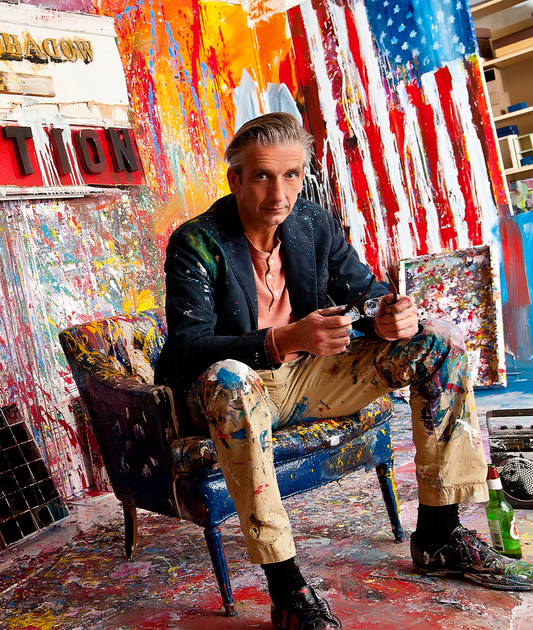
Steve Penley is one of America’s most celebrated contemporary artists, renowned for his neo-pop renderings of historical icons, political figures, and patriotic symbols. His style is bold, energetic, and unmistakably American.

Why it works as a Giclee: Penley’s work is visceral. He uses broad, aggressive brushstrokes, drips of paint, and intense, saturated layers of primary colors. A standard poster flattens Penley’s work into a cartoon. A giclee print, however, retains the explosive energy of his technique. The reds are deeper, the blues more vibrant, and the layered textures of his "Statue of Liberty" series feel almost wet on the canvas. Owning a Penley giclee is the closest most collectors get to the raw power of his originals.
3. Claude Monet: "Water Lilies" Series (Nymphéas)
Monet’s obsession with his Giverny garden resulted in roughly 250 oil paintings of water lilies. They are the pinnacle of Impressionism, focusing not on rigid form, but on light, reflection, and atmosphere.
Why it works as a Giclee: Impressionism is about soft transitions and the interplay of light. The giclee process, which sprays millions of micro-droplets of ink, excels at creating smooth gradients and hazy, ethereal effects that a traditional lithograph often makes look grainy.
4. Mark Rothko: "No. 14" (or similar Color Field works)
Abstract Expressionist Mark Rothko painted huge canvases featuring soft-edged blocks of glowing colors. His goal was to envelope the viewer in sheer emotion through color.
Why it works as a Giclee: Rothko is a torture test for printers. His work relies entirely on the depth, saturation, and subtle interplay of pigments. If the blacks aren't deep enough, or the reds aren't vibrant enough, the emotional impact is lost. Only pigment-based giclee inks can reproduce the intense, meditative saturation of a Rothko color field.
5. Hokusai: "The Great Wave off Kanagawa"
Perhaps the most recognized piece of Japanese art in the world, this woodblock print dates back to the 1830s.
Why it works as a Giclee: While the original was a woodblock, modern giclees on textured, matte fine art paper do an incredible job of replicating the feel of the original rice paper. The Prussian blue pigment—a defining characteristic of the original—prints beautifully with modern archival inks, capturing the claw-like power of the wave.
6. Ansel Adams: "The Tetons and the Snake River" (1942)
If you prefer photography, Ansel Adams is the undisputed master of the landscape. His black and white images define the American West.
Why it works as a Giclee: Adams was obsessed with the "Zone System," achieving the deepest black shadows and the brightest white highlights in a single image. A giclee photo print, using dedicated shades of gray and black inks alongside colors, provides the dynamic range necessary to give an Adams photograph its legendary three-dimensional quality.
7. Gustav Klimt: "The Kiss" (1907–08)
This Symbolist masterwork is famous for Klimt's "Golden Phase," where he used extensive gold leaf on the canvas.
Why it works as a Giclee: Reproducing metallic sheen is the hardest task for a printer. While no print can perfectly replicate actual gold leaf, high-end giclees use specialized yellow and ochre pigment combinations to create a convincing, luminous warmth that far surpasses standard prints.
8. Andy Warhol: "Marilyn Monroe" (Various colorways)
The King of Pop Art used screen printing to turn celebrity into a commodity. His work is graphic, flat, and intentionally repetitive.
Why it works as a Giclee: Warhol’s aesthetic demands absolute crispness and eye-popping color saturation. The giclee process renders the hard edges and vibrant, unnatural colors of his Marilyn series with impeccable sharpness.
9. Edward Hopper: "Nighthawks" (1942)
The quintessential image of American loneliness and urban alienation.
Why it works as a Giclee: This painting is all about cinematic lighting—the harsh fluorescence of the diner spilling onto the dark street. A giclee print handles the high contrast between the deep shadows and the bright interior beautifully, preserving the moody atmosphere.
10. Jean-Michel Basquiat: "Untitled" (Skull, 1981)
Basquiat’s neo-expressionist work is chaotic, combining frantic drawing, painting, and scrawled text.
Why it works as a Giclee: His work is heavily layered, often looking like it was done with oil sticks and crayons on the street. A giclee captures that raw, frenetic texture, ensuring the text remains readable and the layers of paint retain their distinct separation.
Common Questions About Giclee Prints in 2026
Q: Are giclee prints valuable?
A: Yes, but their value depends on several factors. A "limited edition" giclee (where only a set number are made, and they are numbered and signed by the artist) holds significant value and can appreciate over time. An "open edition" giclee is valuable as high-end decor but is less likely to be an investment asset.
Q: How long will a giclee print last?
A: If printed with true archival pigments on acid-free paper and kept out of direct, harsh sunlight, a giclee can last 100 to 200 years without significant fading. They are museum-grade.
Q: What is the difference between a giclee and a lithograph?
A: A traditional lithograph involves plates and pressing ink onto paper; it's better for massive commercial runs but has limitations on color gamut. A giclee is a digital spray process that allows for a wider range of colors and higher resolution, making it superior for reproducing fine art in smaller batches.
Q: How should I frame my giclee?
A: Treat it like an original painting. If it's on paper, use archival, acid-free matting and UV-protective glass or acrylic to prevent yellowing and fading. If it's on canvas, it can be stretched over wooden bars (gallery wrapped) and hung without glazing, just like an oil painting.